

Business Travel Guide to Malabo
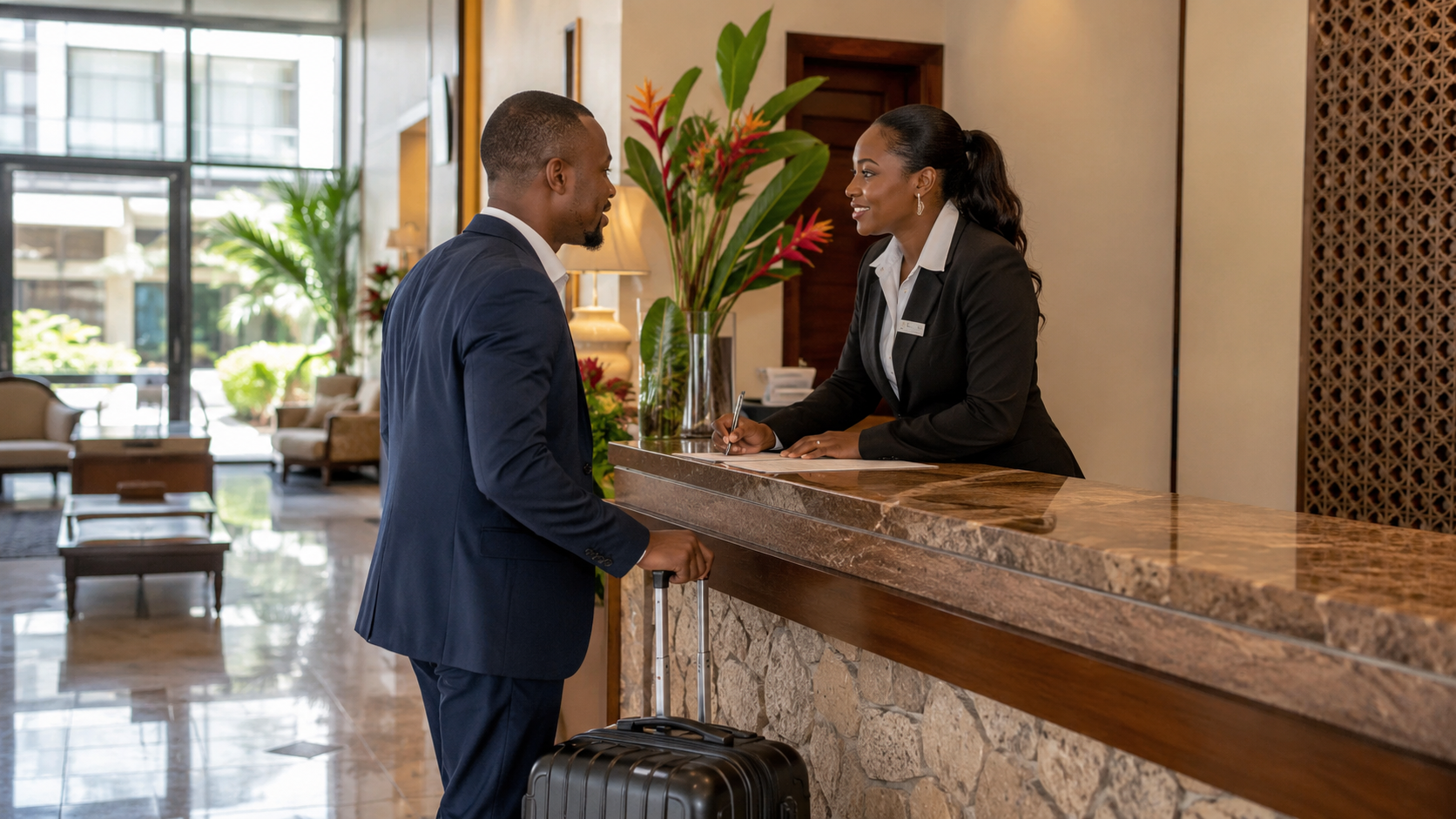
Business travel is never just about getting from one place to another. Behind every meeting, technical visit or client appointment there is preparation that, when done properly, often goes unnoticed. When it isn't, it tends to affect the entire trip.
The same applies in Malabo. The difference between a smooth business stay and one filled with avoidable setbacks usually comes down to decisions made before leaving home: checking your travel documents in advance, choosing accommodation that makes getting around easier or avoiding an overly ambitious schedule.
If this is your first business trip to Equatorial Guinea, you are likely to have questions that go beyond flights and hotels. Which documents should you prepare? How much time should you leave between meetings? When should you complete each stage of the planning process? What type of hotel best suits a business stay? This guide answers those questions with a practical approach.
If you would also like to learn more about the services business travellers typically value, you can read our guide on Travelling to Malabo for Business: Key Advice, Accommodation and Essential Services.
Everything You Should Prepare Before Travelling to Malabo
Much of a successful business trip is decided long before you board the plane. An important meeting can easily be affected by a missing document, an unconfirmed reservation or a schedule that leaves no room for unexpected changes. Most of these situations can be avoided with careful preparation.
Rather than rushing through a checklist at the last minute, it is worth taking a step back and identifying the decisions that will have the greatest impact on your stay. Once those are under control, the trip becomes considerably easier to manage.
A simple way to organise the preparation is to follow a logical sequence.
| Stage | What to Review |
|---|---|
| Initial preparation | Travel documents and entry requirements |
| Organisation | Meetings, agenda and reservations |
| Days before departure | Final confirmations and transport arrangements |
| During your stay | Daily organisation |
| Return journey | Travel schedule and documentation |
This is not intended to be a rigid plan. It simply helps prevent every important task from being left until the final days before departure.
Essential Documentation
Before confirming flights or booking your accommodation, take some time to review all the documentation you may need.
Your passport is the obvious starting point, but it is rarely the only document required. Depending on the purpose of your visit and the regulations in force at the time, you may also need business-related paperwork or documents connected to the company or organisation hosting your visit.
It is equally useful to keep all travel information together in one place. Hotel reservations, flight confirmations, addresses, contact numbers and business documents are likely to be consulted several times throughout the trip. Having everything organised saves time when your schedule becomes busy.
One practical habit that often proves valuable is keeping digital copies of your most important documents. You may never need them, but if an unexpected situation arises, they can make resolving it considerably easier.
Visa and Entry Requirements
One of the most common mistakes is leaving travel documentation until the last few days before departure.
In practice, this leaves very little time to deal with any issue affecting entry requirements.
Because regulations can change over time, it is always advisable to check official sources before confirming your travel arrangements. If your visit is linked to a business project or collaboration with a local organisation, coordinating the required documentation with your host company beforehand is also a sensible step.
Sorting out these formalities before finalising your reservations reduces the risk of changes that could affect both your travel plans and your business schedule.
Medical Insurance and Other Practical Checks
When organising a business trip, most people naturally focus on flights, accommodation and meetings. However, spending a few extra minutes reviewing other practical details is equally worthwhile.
Medical insurance is one of them. Before travelling, it is advisable to understand what your policy covers, how assistance can be requested if necessary and what documentation you would need should an unexpected situation arise.
At the same time, it is worth checking a few other practical details that are often overlooked:
that your passport remains valid for the required period;
that your laptop and mobile phone are working correctly;
that chargers and power adapters have been packed;
that all business documents are up to date.
None of these checks takes long, yet they often prevent unnecessary distractions once the trip is underway.
What to Pack for a Business Trip
Packing for a business trip follows a different logic from packing for a holiday.
Clothing remains important, but it is usually no longer the main concern. Your laptop, chargers, power bank and any documents needed during meetings often become far more significant.
It is also worth downloading essential files before travelling. Even if your hotel provides reliable internet access, having important presentations or documents available offline offers additional peace of mind.
The objective is not to pack more. It is simply to ensure you have everything you are realistically going to need.
When Should You Start Preparing Your Trip?
There is no universal timetable. The amount of preparation required depends on the complexity of the trip and the formalities involved.
That said, spreading the preparation over several stages is usually far more manageable than trying to organise everything during the final days before departure.
| Timeframe | Recommended Action |
|---|---|
| Several weeks before | Check travel documents and entry requirements |
| Two weeks before | Confirm accommodation and business schedule |
| One week before | Review meeting materials and business documents |
| Two days before | Confirm reservations and transport arrangements |
| Day of departure | Carry out a final document check |
Perfection is not the goal. The real objective is reaching departure day knowing that the important decisions have already been made.
How to Organise a Business Trip Efficiently
Once the administrative side has been dealt with, attention shifts to making sure everything works smoothly during the trip itself.
Your accommodation, schedule and transport arrangements all depend on one another. If one of these elements fails, the others are often affected as well.
It is also worth accepting that unexpected changes are part of business travel. Flights are delayed, meetings overrun and new appointments appear with little notice. A flexible schedule generally performs much better than one planned down to the last minute.
Planning Meetings and Your Schedule
A well-organised business schedule is not simply about fitting in as many meetings as possible.
Travel time between appointments, the distance separating different locations and realistic margins for unexpected delays all deserve attention.
Whenever possible, grouping meetings by area of the city reduces unnecessary travel and makes each day considerably more productive.
Leaving short gaps between appointments may seem inefficient while planning the trip. During the trip itself, those small windows often become invaluable.
Booking Accommodation in Advance
Your hotel plays a much larger role in a business trip than many travellers initially expect.
For several days it becomes a workspace, a place to prepare presentations, answer emails, join video calls or simply recover before the following day's meetings.
That is why choosing accommodation should involve more than comparing prices.
Location, easy access from the airport, reliable Wi-Fi and a quiet environment generally have a far greater impact on the overall experience than many secondary facilities.
If you are still comparing accommodation options, our guide to the Best Hotel in Malabo for Business Travel explains the main factors worth considering before making your reservation.
Planning Local Transport
Part of the logistics should already be resolved before you arrive.
Knowing how you will travel from the airport to your hotel, how long your main journeys are likely to take and what alternatives are available if plans change makes organising your schedule much easier.
There is no need to plan every route in detail. Having realistic expectations about travel times is usually enough to prevent transport from becoming an unnecessary concern during your stay.
Arriving in Malabo: Your First Steps
The first few hours after landing often have more influence on the rest of the trip than many people expect. Not because anything particularly unusual happens, but because this is the point where planning ends and the business trip actually begins.
When everything has been organised in advance, the arrival tends to feel straightforward. Your transfer is arranged, the hotel reservation is confirmed and your schedule is already in place. When these details are left unresolved, the first part of the day quickly fills with small decisions that consume valuable time.
There is no need to over-plan every minute. What matters is knowing what comes next as soon as you leave the airport.
Malabo International Airport
Malabo International Airport is the main gateway into Equatorial Guinea for most business travellers.
Once you have completed the arrival formalities, it is worth taking a few moments before continuing your journey. Check that your travel documents are easily accessible, review your agenda for the day and confirm that there have been no last-minute changes to your meetings.
Frequent business travellers often use this moment to review addresses, contact numbers and meeting locations one final time. These are simple checks, yet they can prevent unnecessary phone calls or wasted journeys later in the day.
If colleagues or clients are expecting you, this is also a convenient time to let them know that you have arrived and are on your way to the hotel.
Getting from the Airport to Your Hotel
Airport transfers are one of those aspects of a trip that rarely receive much attention when everything works well.
That is precisely why they deserve some planning beforehand.
If your schedule begins the same day or early the following morning, already knowing how you will reach your hotel allows you to focus on your work instead of dealing with transport arrangements after landing.
If your business activities will take you to different parts of Malabo during your stay, it is equally useful to have a general idea of travel times between locations. There is no need to calculate every journey precisely, but building a realistic schedule is far easier when transport has already been considered.
Your First Practical Tasks
Checking into your room is only the beginning.
Before considering the arrival complete, it is worth spending a few minutes preparing for the following day. It is a simple habit, but one that usually makes the first working morning considerably less stressful.
Rather than leaving everything until the next day, it is advisable to:
connect your devices to the internet;
organise the documents needed for your first meetings;
review your schedule;
confirm any key appointments;
prepare your work materials.
These tasks take very little time, yet they allow you to begin the following morning focused on your work rather than on administrative details.
Choosing the Right Hotel for a Business Trip
Selecting accommodation for a business trip requires a different mindset from booking a leisure holiday. Your room is not simply somewhere to sleep. For several days it may also become your office, your meeting preparation space and the place where you recover after long working hours.
For that reason, it makes sense to evaluate a hotel according to how well it supports your working routine rather than focusing solely on its category or nightly rate.
The best choice depends on the purpose of the trip, but there are several criteria that almost always deserve attention.
Location
Location influences almost every part of a business trip.
A well-positioned hotel reduces travel time and makes it easier to reach meetings with enough time to prepare.
Before confirming a reservation, consider questions such as:
How long will it take to reach my meeting locations?
How convenient is the journey from the airport?
Will I need to travel several times each day?
Is the surrounding area suitable for resting after work?
These practical considerations often prove more valuable than comparing room rates alone.
Connectivity
Reliable internet access has become an essential part of almost every business trip.
Video meetings, cloud-based work, document sharing and routine communication all depend on a stable connection.
Before booking accommodation, it is worth confirming that the hotel offers internet access suitable for professional use. Availability is important, but consistency is what really matters during a working day.
Rest
Some decisions only reveal their importance after several days.
Choosing a quiet room is one of them.
After demanding working days, good rest directly affects concentration, decision-making and productivity during the following day's meetings.
Elements such as noise levels, comfort and the overall atmosphere of the room often become far more significant than they appeared when making the reservation.
If you would like to explore this subject further, you can also read The Importance of Comfort During International Travel.
Dining
On particularly busy days, having a restaurant within the hotel can make scheduling much easier.
It reduces unnecessary journeys and provides a practical option when there is very little time between meetings.
In some cases, it also offers a comfortable setting for informal business conversations without leaving the hotel.
What Business Travellers Should Look for in a Hotel
Rather than long lists of facilities, business travellers generally value services that genuinely support their daily routine.
| Feature | Importance |
|---|---|
| Good location | Very High |
| Reliable Wi-Fi | Very High |
| Quiet rooms | Very High |
| Restaurant | High |
| Reception with extended opening hours | High |
| Daily housekeeping | High |
| Flexible stay arrangements | Medium-High |
If your trip is expected to last several weeks, our guide on How to Choose a Hotel for Long Stays in Malabo explores these considerations in greater detail.
What Type of Business Traveller Are You?
Not every business trip has the same purpose, and not every traveller expects the same things from their accommodation.
Someone attending commercial meetings may prioritise a location that minimises travel time. An engineer working on-site for several weeks is more likely to value comfort, quiet surroundings and a consistent daily routine.
Before making a reservation, it is worth thinking about how the hotel will actually be used throughout the trip.
| Traveller Profile | Typical Priorities |
|---|---|
| Executives | Convenience, comfort and strategic location |
| Consultants | Quiet working areas and reliable connectivity |
| Engineers and technical professionals | Flexibility and support for long working days |
| Sales professionals | Easy access to meetings and efficient travel |
| International project teams | Comfortable accommodation for extended stays |
There is no universal choice. The most suitable hotel is the one that genuinely fits the purpose of your trip.
Staying Productive During Your Time in Malabo
Preparation ends when the journey begins. From that point onwards, productivity depends largely on how each working day is managed.
Almost every business trip involves small changes. Meetings are rescheduled, new appointments appear or unexpected calls interrupt the original plan. Trying to control every minute usually creates more problems than it solves.
A flexible approach tends to work much better.
Managing Your Time
A useful habit is reviewing your schedule at the beginning and again at the end of each day.
Doing so makes it easier to adjust priorities, prepare documents and identify potential conflicts before they become genuine problems.
It is equally sensible to avoid filling every available gap with meetings. Leaving reasonable breaks between appointments creates enough flexibility to deal with unexpected situations without disrupting the rest of the day.
Creating a Suitable Working Environment
Not every task takes place outside the hotel.
Preparing presentations, answering emails or joining online meetings all require a quiet space where you can concentrate.
There is no need for a large office. In most cases, a comfortable room, a suitable desk and reliable internet access provide everything required to work efficiently.
Preparing for the Next Day
Tomorrow's schedule often depends on what you do before going to bed.
Reviewing appointments, confirming meeting times and organising the documents you will need the following morning usually makes the next day far less stressful.
If your schedule leaves some free time, getting to know the city can also add value to your visit. Our guide What to See and Do in Malabo: A Complete Guide to Discover Equatorial Guinea's Capital includes several ideas that can easily fit around a business itinerary.
Advice Based on the Length of Your Stay
The way you organise a business trip should reflect how long you are going to be in Malabo. That may sound obvious, yet many travellers prepare a two-day visit in almost the same way as a stay lasting several weeks. After a certain point, that approach simply stops working.
Someone arriving for a couple of meetings has different priorities from someone joining a long-term project. Your accommodation, schedule, luggage and even your daily routine should reflect that difference.
Two or Three-Day Business Trips
When your time is limited, every journey matters.
For short visits, investing a little more time in preparation usually pays off. Confirming meetings before departure, understanding the main travel routes and choosing accommodation in a convenient location helps make the most of every working hour.
It is also worth resisting the temptation to overfill your schedule. If every meeting depends on perfect timing, a single delay can disrupt the rest of the day.
Sometimes leaving one free slot in your diary is far more productive than trying to fit in one additional meeting.
One-Week Business Trips
A week provides much more flexibility.
Meetings can be spread across several days, leaving time to prepare documents, review ongoing work and respond to unexpected changes without constantly rearranging your schedule.
During longer visits, the hotel becomes increasingly important. After several demanding working days, having a comfortable place to return to makes maintaining a consistent routine much easier.
It is also a good idea to review your agenda regularly. New meetings and schedule adjustments often appear as the week progresses, so allowing room for changes usually makes the trip run more smoothly.
Extended Business Stays
When a business trip lasts several weeks, the hotel stops being simply somewhere to spend the night.
It becomes part of your everyday working environment. It is where you prepare for meetings, recover after long days and often continue working between appointments.
In these circumstances, factors that might seem secondary during a short visit become much more important.
| Aspect | Why It Matters |
|---|---|
| Comfortable room | Better rest after long working days |
| Reliable internet connection | Supports daily professional work |
| Hotel services | Make long stays easier to manage |
| Location | Reduces repeated travel time |
| Flexibility | Helps if your stay needs to be extended |
The longer your stay, the more sense it makes to view the hotel as part of your working environment rather than simply somewhere to sleep.
Common Mistakes During Business Trips to Malabo
Most difficulties encountered during business travel are not caused by major problems. More often than not, they stem from small decisions made before the journey even begins.
Recognising these mistakes in advance is usually far easier than trying to solve them once your schedule is already underway.
Leaving Documentation Until the Last Minute
This is probably the most common mistake.
Checking your passport, entry requirements or business documentation only a few days before departure leaves very little room to deal with unexpected issues.
Reviewing everything well in advance and carrying out one final check shortly before travelling is a far safer approach.
Choosing Accommodation Based Only on Price
Cost always matters, but it should rarely be the only factor.
A hotel located far from your meeting venues can result in unnecessary daily travel and a much less efficient working schedule.
Sometimes paying slightly more for a better location saves valuable time throughout the entire stay.
Overloading Your Schedule
Filling every available hour does not necessarily make a business trip more productive.
Meetings may run longer than expected, new appointments can arise and priorities often change during the visit.
A realistic schedule almost always performs better than one that looks perfect on paper.
Improvising Local Transport
Trying to organise transport after arriving in Malabo means spending time on logistics when your attention should already be focused on work.
There is no need to know every route in advance, but it is sensible to understand how you will reach your hotel, how long your main journeys are likely to take and what alternatives exist if plans change.
Neglecting Rest
Business trips often create the temptation to extend working hours in order to make the most of every day.
Over several days, however, insufficient rest usually affects concentration, decision-making and overall performance.
Good rest should be viewed as part of effective business planning rather than as time lost.
Frequently Asked Questions
What documents do I need for a business trip to Malabo?
Before travelling, check that your passport is valid and review the current entry requirements. Depending on the purpose of your visit, you may also need documentation related to your company or the project you will be working on.
How far in advance should I start planning the trip?
Whenever possible, begin planning several weeks before departure. This provides enough time to organise documentation, secure suitable accommodation and avoid unnecessary last-minute changes.
What should I prioritise when choosing a hotel for business travel?
Location, reliable internet access, quiet rooms and services that genuinely support your working routine are generally far more valuable than facilities you are unlikely to use.
Should I organise transport before arriving in Malabo?
Yes. Knowing how you will travel from the airport and planning your main journeys in advance allows you to focus on your work from the moment you arrive.
How can I organise my meeting schedule more efficiently?
Leave reasonable time between appointments, group meetings by location whenever possible and avoid planning every minute of the day.
What are the most common mistakes during business trips?
The most frequent issues include leaving documentation until the last minute, choosing accommodation based only on price, improvising transport arrangements and creating an overly ambitious schedule.
How long does a typical business trip to Malabo last?
There is no standard duration. Some visits last only a few days, while others involve technical projects or international business collaborations that require much longer stays. Your planning should reflect the actual length of your visit.
What type of accommodation is most suitable for business travellers?
Hotels offering a convenient location, reliable Wi-Fi, quiet rooms and services designed to support professional travellers generally provide a better experience than accommodation aimed primarily at leisure tourism.
What changes if the stay lasts several weeks?
During extended visits, comfort, the ability to work from the hotel, good rest and flexibility become increasingly important as the accommodation becomes part of your daily routine.
What should I check the day before travelling?
Confirm your flights and hotel reservation, review your meeting schedule, ensure all travel and business documents are ready and verify that your laptop, chargers and other essential work equipment have been packed.
