

Historical Curiosities of Malabo, Bioko and Equatorial Guinea
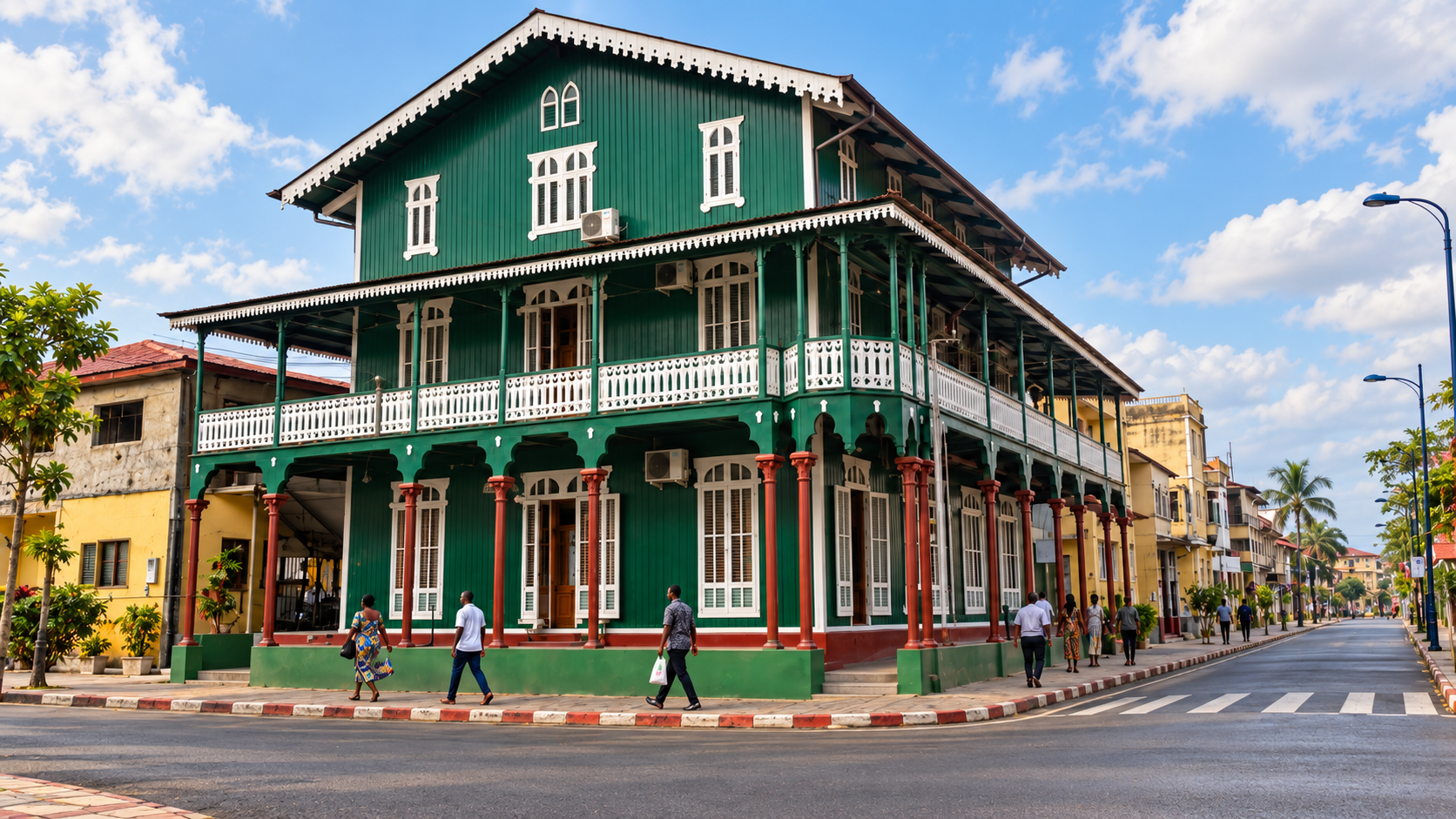
Malabo has had three names in less than two centuries. Before becoming Malabo, it was Port Clarence, a British settlement associated with naval operations against the slave trade, and later Santa Isabel, during Spanish colonial rule. Behind these changes lies a history far more complex than its streets might suggest, and certainly much older than the European presence on Bioko Island.
The Bubi people, Creole communities arriving from West Africa, the cocoa trade and Equatorial Guinea's independence are all part of that history. Traces of these different periods can still be found in the city, particularly in its architectural heritage and the cultural diversity that characterises Bioko.
These historical curiosities of Malabo offer a closer look at lesser-known events and explain why an African city came to have a British name, then a Spanish one, and finally a name associated with Bubi royalty. They also reveal Malabo's relationship with the rest of Equatorial Guinea, a country whose history extends far beyond its colonial period.
The Names of Malabo Tell a Surprising Story
City names often survive changes of government, political conflicts and shifts in power. In Malabo, the opposite happened throughout much of the 19th and 20th centuries. Each new name reflected a change in the authorities governing the territory.
Port Clarence, Santa Isabel and Malabo represent three distinct historical periods. Yet this does not mean that the local population changed its identity whenever official documents adopted a different name. Bioko's communities maintained their own languages, customs and connections to the land while European administrations renamed the places around them.
Port Clarence: When Malabo Had a British Name
The port settlement from which modern Malabo developed was established by the British in 1827. It was founded by William Fitzwilliam Owen, a British naval officer who arrived on the northern coast of Bioko, then known on European maps as Fernando Poo.
His mission was connected to naval operations aimed at suppressing the transatlantic slave trade. The Gulf of Guinea was strategically important for these activities, and the island offered a suitable location for maintaining a naval presence.
The settlement was named Port Clarence in honour of the Duke of Clarence, who would later become King William IV of the United Kingdom.
There is an interesting complication in this story: Spain had already claimed rights over the island through treaties signed with Portugal in the 18th century. However, those claims had not resulted in effective and permanent control over the entire territory.
The British presence therefore developed in a region where the interests of different European powers overlapped.
It would also be incorrect to describe 1827 as the beginning of the island's history. Bioko was already inhabited by Bubi communities, with their own social structures and traditions long before Owen arrived.
What emerged at that time was a new port settlement under British influence, not the first human settlement in the area.
Santa Isabel: The City Under Spanish Colonial Rule
The name Port Clarence did not remain in use for very long.
In 1843, an expedition led by Spanish naval officer Juan José de Lerena y Barry arrived on the island to reaffirm Spain's territorial claims. The settlement was renamed Santa Isabel.
The change was politically significant, although the consolidation of Spanish colonial administration took considerably longer. Territorial control, relations with local populations and the development of colonial institutions evolved over the following decades.
Santa Isabel gradually grew into an administrative, religious and commercial centre. Public buildings, houses, port facilities and other structures began to reshape its appearance.
The port became particularly important as Bioko's agricultural economy expanded. The movement of goods, the arrival of workers and the needs of the colonial administration all influenced the city's development.
Some of the historic architecture still standing in Malabo dates from this period.
Nevertheless, it would be misleading to equate the most prominent colonial buildings with the full history of society at that time. Infrastructure was developed and certain economic activities expanded, but this process was accompanied by significant inequalities, land disputes and unequal power relations that directly affected African communities.
Why Was Santa Isabel Renamed Malabo?
The city officially adopted the name Malabo in 1973, five years after Equatorial Guinea gained independence.
The new name honours Malabo Lopelo Melaka, a historical figure associated with the traditional Bubi monarchy on Bioko Island.
The change took place during the presidency of Francisco Macías Nguema, as part of a policy of replacing colonial place names with names of African origin.
The decision symbolised a break with the Spanish colonial past. However, the meaning behind the name deserves a closer examination.
The history of Bubi royalty does not necessarily correspond to the European concept of a monarchy exercising uniform authority over an entire population. Traditional leadership, relations between communities and territorial disputes changed over time, particularly as colonial influence expanded.
Although the city's current name honours a historical Bubi figure, it is worth understanding that background before attributing specific powers or responsibilities to him without sufficient documentary evidence.
The city's main name changes can be summarised as follows:
| Historical Name | Period | Historical Context |
|---|---|---|
| Port Clarence | 1827 to 1843 | British settlement and naval activity |
| Santa Isabel | 1843 to 1973 | Re-establishment of the Spanish presence, colonial administration and early years of independence |
| Malabo | Since 1973 | Name associated with the traditional Bubi monarchy |
These dates mark the principal administrative changes. The cultural influence of each period, however, did not disappear when the city's official name changed.
Historical Curiosities of Bioko That Explain Malabo's Past
Malabo's history cannot be fully understood by looking only at the city itself. Bioko is a volcanic island in the Gulf of Guinea, off the coast of Cameroon, and its communities had their own history long before colonial settlements were established.
Its geographical position encouraged contact with mainland Africa and, later, with sailors and traders from different parts of the world.
This combination of island history, population movements and commercial interests explains some of the cultural characteristics that still distinguish Malabo today.
The Bubi People Inhabited Bioko Long Before Europeans Arrived
The Bubi people are one of the historical roots of Bioko Island. Their presence predates European colonisation, and their language belongs to the Bantu language family.
Bubi communities developed their own forms of social and political organisation, adapted to the island's geography and environment. Agriculture, relations between settlements and certain religious practices formed part of everyday life.
These communities were not necessarily organised in exactly the same way across the island. Different settlements and traditional authorities maintained their own relationships, and those structures changed over time.
The arrival of traders, missionaries and representatives of European powers significantly altered this balance.
There were negotiations and agreements, but also resistance, displacement and conflicts over territorial control. The expansion of plantations and colonial administration placed additional pressure on local communities.
This aspect of Bioko's history deserves particular attention because many historical accounts begin with the Portuguese, British or Spanish presence. Such an approach leaves out much of the island's earlier history.
The founding of Port Clarence explains the origins of a particular modern urban settlement. It does not mark the beginning of society on Bioko. Its inhabitants already possessed their own history, institutions and relationship with the island, even if colonial documents did not always represent their perspectives accurately.
Bubi heritage remains part of Equatorial Guinea's cultural and linguistic diversity, although its history should not be reduced to the traditions that have survived into the present day.
Why Was Bioko Called Fernando Poo?
Anyone examining old maps of the Gulf of Guinea will frequently encounter a name that no longer appears on modern maps: Fernando Poo.
It was one of Bioko's historical names and was associated with the Portuguese navigator Fernão do Pó, who was connected with European exploration of this part of Africa during the 15th century.
The name Formosa also appears in some Portuguese historical sources.
Over time, Fernando Poo became widely used in European documentation and remained in use throughout much of the Spanish colonial period. It appears in maps, official records, geographical studies and travellers' accounts.
Following Equatorial Guinea's independence, the island underwent further name changes. During Francisco Macías Nguema's presidency, it was named Macías Nguema Biyogo. After the change of government in 1979, it adopted its present name, Bioko.
A common source of confusion when reading historical documents is that Fernando Poo referred to the island, while Santa Isabel was the name of the city now known as Malabo.
This distinction becomes particularly useful when examining old photographs, colonial maps or documents that use both names without explaining which location each one refers to.
The Fernandinos and a Lesser-Known British Heritage
British influence on Bioko did not end when Port Clarence ceased to be the settlement's official name.
During the 19th century, people arrived on the island from Sierra Leone and other parts of West Africa. They included traders, workers, families and people freed from ships involved in the slave trade.
Against this background, Creole communities historically known as Fernandinos developed on the island. Their involvement in commerce and urban life contributed to the development of Santa Isabel.
They also left a linguistic legacy that remains present on Bioko today.
This legacy includes Pichi, an English-lexifier Creole language historically related to Krio, which is spoken in Sierra Leone.
Pichi coexists with Spanish, Bubi and other languages spoken by the island's different communities. Its development reflects contact between African populations from different backgrounds and the social changes that took place during the 19th century.
The existence of this language is particularly interesting because Equatorial Guinea is often associated internationally with its Spanish colonial past.
Malabo's linguistic history, however, is more varied. The city was also influenced by West African trading networks and population movements whose origins cannot be explained solely through Spanish rule.
Pichi remains one of the clearest examples of that cultural history.
Equatorial Guinea's History Also Transformed Malabo
Malabo's development was shaped by events affecting Equatorial Guinea as a whole. Some had direct consequences for the city, even when they originated elsewhere on Bioko or in the country's mainland territories.
The expansion of the cocoa economy and independence in 1968 are two particularly significant examples. The former changed the island's economic and social relationships, while the latter transformed its political status.
Cocoa Made Bioko an Important Agricultural Territory
During the colonial period, Bioko became closely associated with cocoa production.
The island's climate favoured the development of commercial plantations. As they expanded, land use, economic activity and labour requirements changed.
Santa Isabel played an important role as a port and administrative centre connected to this agricultural system.
Goods associated with agricultural production and supplies for the island passed through its port, while plantations expanded across different parts of Bioko.
It would be misleading, however, to describe this period simply as one of economic growth.
Plantation agriculture was associated with disputes over land ownership, inequalities between European and African producers, and working conditions that varied throughout the colonial period. The arrival of workers from other African territories also influenced Bioko's social composition.
These population movements, together with agricultural expansion, changed relationships between the island's different communities.
Cocoa was an economically significant crop, but its history was also shaped by the inequalities of the colonial system.
Understanding this period helps explain why Santa Isabel became such an important commercial centre and how agriculture contributed to Bioko's transformation.
Independence in 1968 and Its Consequences for Malabo
Equatorial Guinea gained independence from Spain on 12 October 1968. Santa Isabel became the capital of the newly sovereign state, which brought together mainland and island territories previously administered by Spain.
Independence represented a decisive political change, but the country inherited numerous administrative structures, infrastructure networks and economic relationships established during the colonial period.
Spanish continued to play an important role in administration and education. Meanwhile, Equatorial Guinea's different communities faced the challenges of building a new state.
The years that followed were marked by a severe political and social crisis.
During Francisco Macías Nguema's presidency, political persecution, serious human rights violations and population displacement deeply affected the country.
These events also shaped life in Malabo, which retained its role as the state's administrative centre.
Equatorial Guinea's independence therefore represented far more than a transfer of sovereignty. It opened a new chapter whose political and social consequences continued to unfold over the following decades.
Understanding Malabo requires an awareness of this period, without confusing the celebration of independence with the difficult political developments that followed.
Historical Landmarks That Remain Part of Malabo
Malabo's past is not confined to historical archives. Some of the city's buildings and public spaces still reveal traces of the different periods it experienced during the 19th and 20th centuries.
This does not mean that every old building has preserved its original appearance. Renovations, changes of use and conservation challenges have altered parts of the city's architectural heritage.
Even so, certain landmarks remain valuable references for understanding how Santa Isabel developed and the role colonial institutions played in shaping the city.
Santa Isabel Cathedral and Malabo's Historic Architecture
Santa Isabel Cathedral is one of Malabo's most recognisable historic buildings.
Construction took place between the late 19th and early 20th centuries. The cathedral was inaugurated in 1916 and features characteristic elements of neo-Gothic architecture, including pointed arches and the vertical composition of its facade.
The presence of a religious building of this kind in a tropical African city reflects the European architectural influence of the colonial period.
Throughout its history, the cathedral has undergone various phases of conservation and restoration.
One of its most difficult moments came in January 2020, when a serious fire broke out during restoration work. The blaze caused extensive damage to the building and once again raised concerns about the challenges of protecting historical structures of this nature.
The fire was reported in an official statement by Spain's Ministry of Foreign Affairs and attracted considerable attention because of the cathedral's heritage value.
The cathedral remains a reference point for understanding the history of Santa Isabel, but Malabo's architectural heritage extends beyond this single monument.
Former administrative buildings, certain colonial-era residences and elements of the historic street layout also reveal different phases of the city's development.
Not all these buildings are open to visitors or retain their original functions. Before planning a visit, it is worth distinguishing between places that can be viewed from public areas and those where access is restricted or requires permission.
Ciudad de la Paz: The Change of Capital in 2026
One of the most recent events in Equatorial Guinea's history directly concerns Malabo.
On 2 January 2026, Decree-Law 1/2026 was approved, declaring Ciudad de la Paz, in the mainland province of Djibloho, the country's new capital.
The legislation established a one-year period for state institutions and public bodies to take the necessary steps to organise their relocation and establishment in the new capital.
There is an important distinction here: the legal designation of a capital and the physical relocation of every government department do not necessarily happen at the same time.
The decision ended Malabo's legal status as the national capital, a role it had held for decades.
The historical implications are considerable. Since independence in 1968, Malabo had concentrated a significant share of the country's political and administrative functions. The designation of a new capital represents a territorial reorganisation of those responsibilities.
That does not mean Malabo has lost its cultural or economic importance.
The city retains its historical heritage, its close relationship with the rest of Bioko and an urban history deeply connected to the development of Equatorial Guinea.
Exploring Malabo's Past During Your Visit
Malabo's history becomes easier to appreciate when it is connected to places that still exist in the city.
Santa Isabel Cathedral is an obvious landmark, but understanding the origins of Port Clarence, the Santa Isabel period and subsequent changes offers a different perspective on the surrounding urban landscape.
Some buildings retain architectural features from earlier periods, while others have changed considerably. The historical heritage of a living, evolving city does not always look the same as it does in old photographs.
Before setting out, check which places are open to visitors and which can only be viewed from outside. Access and photography restrictions deserve particular attention around official premises and government buildings.
It is also unwise to assume that an old building operates as a museum or visitor attraction. Its age alone does not mean that public access is permitted.
Visitors with several days available can extend their journey to other parts of Bioko, including Luba, to experience surroundings quite different from Malabo.
The island's history extends well beyond its principal city. Former agricultural activities, population movements and the diversity of its communities are all part of a past worth exploring at a relaxed pace.
Staying in Malabo While Exploring Bioko
Malabo is a convenient starting point for travellers wishing to combine cultural visits, city walks and journeys to other parts of Bioko Island.
If you are planning a trip to Equatorial Guinea, Hotel Anda Malabo offers accommodation from which to organise your stay and spend time exploring the island's history, landscapes and culture.
Planning visits in advance, checking access conditions and allowing enough time for travel are sensible precautions, particularly if you intend to explore destinations outside the city.
Frequently Asked Questions About Malabo's History
What Was Malabo Called Before It Received Its Current Name?
Malabo was known as Port Clarence from 1827, when the British established a port settlement on the northern coast of Bioko.
In 1843, during the re-establishment of the Spanish presence, it was renamed Santa Isabel. The current name, Malabo, was adopted in 1973 in honour of a historical figure associated with the traditional Bubi monarchy.
Are Malabo and Bioko the Same Place?
No. Malabo is a city, while Bioko is the island on which it is located, off the coast of Cameroon in the Gulf of Guinea.
The confusion often arises when consulting historical documents because the city and the island had different names. Santa Isabel referred to the city, whereas Fernando Poo was a historical name used for the island.
Why Is Spanish Spoken in Malabo if the City Also Has a British Heritage?
Spanish is associated with the period of Spanish colonial administration and remained an official language after Equatorial Guinea gained independence in 1968.
The earlier British presence and population movements from West Africa contributed to a more diverse linguistic environment. One example is Pichi, an English-lexifier Creole language spoken on Bioko.
Is Malabo Still the Capital of Equatorial Guinea?
Not in legal terms. Decree-Law 1/2026, dated 2 January, declared Ciudad de la Paz, in Djibloho Province, the new capital of Equatorial Guinea.
The legislation established a period for organising the relocation of public institutions. Consequently, the legal change of capital should not be confused with the immediate physical relocation of every government department.
