

Hotel with Meeting Rooms in Malabo
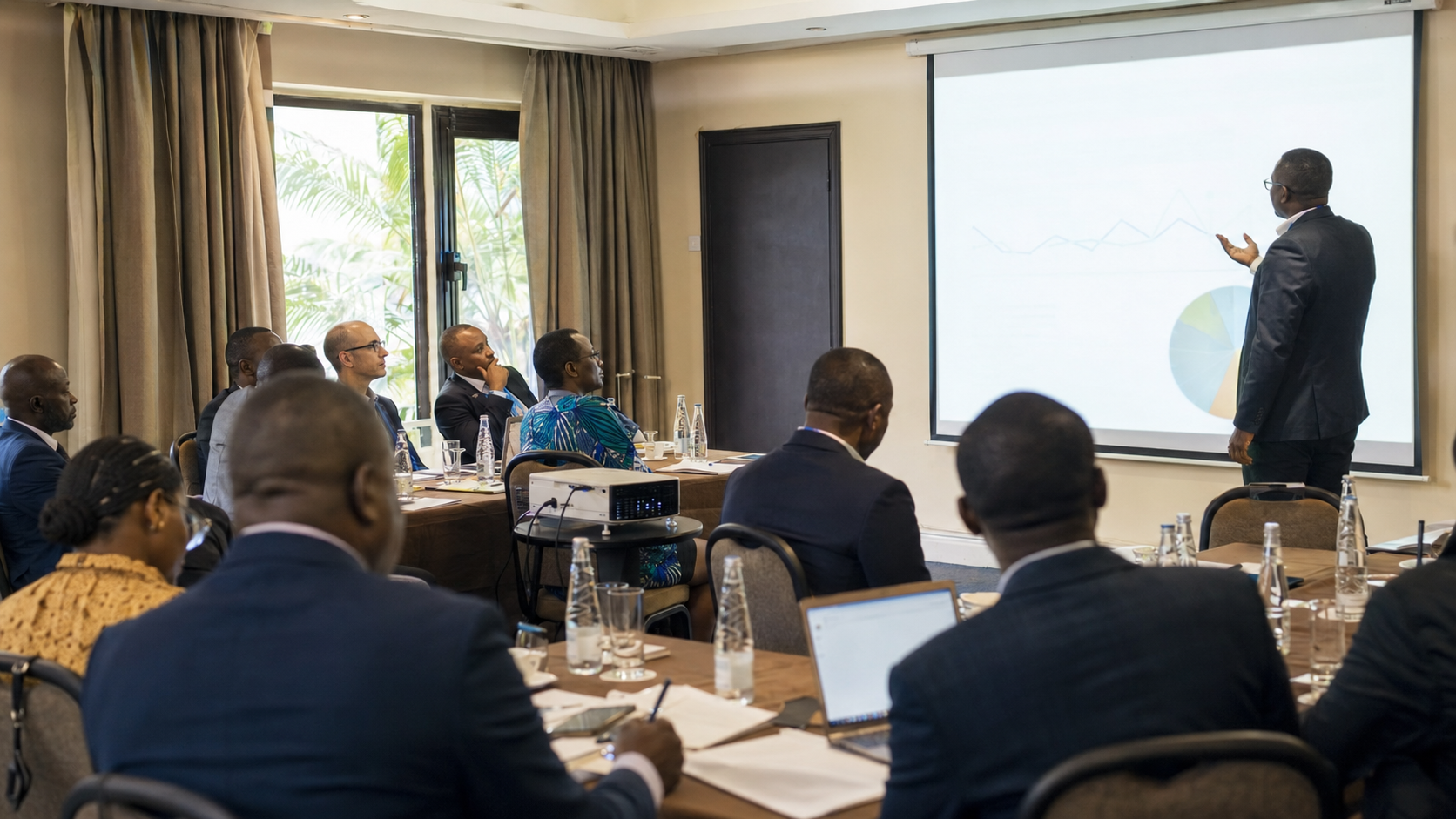
Hotel Anda Malabo offers spaces designed for business meetings, training sessions, presentations, conferences and professional gatherings. Some formats work well for small groups. Others call for a larger room, wider circulation areas and far more careful technical planning.
Capacity alone reveals very little. A one-hour meeting around a table has little in common with a computer-based training session, a projected presentation or a conference involving several speakers. The room layout, furniture, sound requirements and length of the programme ultimately determine which space will actually work.
Holding the meeting in the same hotel where participants are staying also removes part of the logistical burden. Meals, breaks and schedules can be coordinated from one place, which is particularly useful for companies, delegations and professionals travelling to Malabo with a demanding agenda.
Request availability and a proposal for your meeting
Rooms for Meetings, Training Sessions and Corporate Events in Malabo
The right room is not necessarily the largest one. For a management meeting, an oversized space can make conversation feel distant and unnecessarily formal. At a conference, the opposite problem arises: insufficient room for the stage, equipment or aisles can affect the entire programme.
Hotel Anda Malabo offers different options for professional gatherings. The choice depends on the number of attendees, but also on what they will be doing during the session. Listening to a presentation, working with documents, discussing matters around a table or attending a corporate meal all require different layouts.
Duration matters as well. A brief presentation can work with a more compact arrangement. A full-day training session requires greater comfort, enough space between rows, properly arranged breaks and easy access to dining services.
Executive Meetings and Working Sessions
Management meetings, interviews and negotiations tend to work better in more contained rooms. Proximity encourages discussion and prevents a working session from feeling more ceremonial than it needs to be.
Beyond size, privacy, lighting, external noise and screen positioning should all be reviewed. When somebody is joining by video call, the camera and audio need to be settled before everyone takes their seat, not once the meeting has already started.
For longer sessions, less visible details also matter: temperature, access to refreshments, break times and the option to eat without losing time travelling elsewhere.
Conferences, Presentations and Professional Events
Larger events follow a different logic. They may require a registration area, reserved space for speakers, technical control and aisles wide enough for people to move comfortably. When dining, interpretation or parallel sessions are involved, the layout needs additional margin.
A room filled to its theoretical maximum capacity often works less effectively than it appears on a floor plan. Attendees struggle to enter and leave, service becomes more difficult and any last-minute adjustment leaves little room to manoeuvre.
The Layout Changes the Real Capacity
The same space can accommodate very different numbers depending on the setup. Theatre-style seating takes up less room than a layout with tables. A stage, several screens or an area for serving refreshments reduces usable capacity even further.
The right question is not simply how many people fit. It is what those people will be doing during the meeting.
| Main requirement | Suggested setup | Typical use |
|---|---|---|
| Listening to a speaker or presentation | Theatre | Conferences and informational events |
| Taking notes or working on a computer | Classroom | Training sessions and seminars |
| Discussing matters around one table | Boardroom | Management, negotiations and executive work |
| Participating with a trainer or moderator | U-shape | Workshops and interactive sessions |
| Sharing a professional meal | Banquet | Business meals and corporate celebrations |
| Creating a more informal reception | Cocktail | Networking and short gatherings |
These configurations are intended as guidance. The final layout will depend on the available room, the number of participants and the services included in the event.
The opposite mistake should also be avoided. A room that is much too large can place the audience too far from the speaker and create the impression of poor attendance. Choosing well is a matter of balance, not simply booking extra space just in case.
What Types of Events Suit Hotel Anda Malabo?
Two meetings with the same number of people may need completely different spaces. The activity taking place in the room is what matters.
Business Meetings and Board Meetings
An executive meeting calls for privacy, a comfortable table and a layout that supports discussion. When documents or figures will be reviewed, the screen must be clearly visible from every seat.
If part of the team is participating remotely, acoustics require close attention. A well-positioned camera is of little use when remote participants cannot hear what is being said around the table.
During longer meetings, a poorly planned break can disrupt the entire timetable. Having dining and accommodation in the same hotel reduces that risk and leaves more flexibility to adjust the agenda.
Training Sessions and Seminars
It is not enough for everybody to fit inside the room. Participants must be able to write, use a computer and follow the trainer without obstruction. Theatre seating offers higher capacity, but it quickly becomes unsuitable when the group needs to work with materials.
The distance between rows also affects the session. When exercises, group work or movement around the room are planned, this should be mentioned from the beginning. Changing the layout on the day is rarely a good solution.
Presentations and Conferences
The relationship between the speaker, the screen and the audience needs to be settled before the room is set up. Poor positioning can leave certain areas with limited visibility and force some attendees to follow the session from an uncomfortable angle.
Conferences may require sound systems, microphones, technical support and additional rooms. When several speakers or remote participants are involved, every element adds another layer of coordination.
Delegations and International Groups
Delegations often work with fixed timetables. Private meetings, meals, main events and rest periods need to fit together with little room for improvisation.
When participants are travelling from different countries, the working languages should be communicated from the first enquiry. Multilingual events require more careful planning of the sound system, interpretation and room layout. This guide to events with simultaneous interpretation in Malabo explains which issues should be addressed before the setup is confirmed.
Equipment and Connectivity
The equipment required depends on the format. An internal meeting may only need an internet connection and a screen. A conference with several speakers could require a sound system, microphones, projection equipment and support throughout the session.
This is why vague expressions such as “fully equipped room” should be treated with caution. Before booking, the organiser needs to know which resources are available, which are included in the proposal and which must be hired separately.
When requesting information, the organiser should indicate whether the event needs:
Projection equipment and a screen.
Microphones or a sound system.
Video conferencing.
Flip charts or training materials.
Power connections for attendees.
Support with preparing the room setup.
Video conferencing deserves its own review. Connectivity is only one part of the equation. Acoustics, lighting, camera positioning and the way comments from people inside the room are captured all affect the experience.
Connectivity remains necessary once the meeting has finished. Organisers and speakers often need to send documents, prepare materials or make calls from the hotel. This guide to fast Wi-Fi in a Malabo hotel for productive work covers several useful criteria for assessing this aspect.
Accommodation and Dining in the Same Hotel
An independent meeting room solves the question of where to hold the event, but accommodation, meals and transport still need to be organised separately. When these services are coordinated within a single property, there are fewer points at which something can go wrong.
Accommodating speakers, organisers and attendees in the same hotel works particularly well for early starts, multi-day programmes and schedules with little time between activities.
Dining should follow the real pace of the programme. A short break between two presentations requires quick service. A business lunch needs more time, a suitable setting and a realistic plan for returning to the meeting room.
Dietary requirements should not be left until the end either. The earlier they are known, the easier it is to arrange the service without unnecessary improvisation.
Depending on the format, organisers can enquire about breakfasts, coffee breaks, lunches, dinners or receptions. The specific options are agreed when the proposal is prepared.
During business stays lasting several days, rest matters more than it may appear when the agenda is first arranged. This information on choosing a quiet hotel to relax in Malabo may be useful for organisers and attendees.
How to Request a Quote That Is Actually Useful
A request that is too vague usually leads to several revisions of the proposal. When the hotel knows the schedule, attendance and planned activity from the start, it is easier to recommend a suitable space.
Before getting in touch, it is worth defining:
The date and schedule of the event.
The approximate number of attendees.
The type of meeting and planned activity.
The preferred room setup.
The audiovisual equipment required.
Dining services.
The number of rooms needed.
Accessibility or logistical requirements.
The price will depend on the duration, room, setup and additional services. A standalone rate is not particularly useful unless it is clear what it includes.
When comparing proposals, check whether they include setup, audiovisual equipment, breaks or additional support. Two similar quotes can cover very different services.
For the wider organisation of the programme, this guide on how to organise a corporate event in Malabo explains the decisions that should be made before confirming the date and suppliers.
Request a proposal for the meeting room, accommodation and dining
Location and Logistics for Meetings in Malabo
When some attendees are arriving from outside the city, logistics can matter as much as the room itself. Access, journey times and the arrival of external suppliers or equipment need to be considered.
Before confirming the event, organisers should ask how guests staying at the hotel and those attending only the meeting will arrive. If the setup involves audiovisual equipment, decoration or a large quantity of printed material, the timing and access route for deliveries should also be agreed.
Accommodating the group in the same property reduces movement during the day and makes the schedule easier to control. This is particularly relevant for delegations, teams with several consecutive meetings and programmes starting early in the morning.
Specific arrangements for transport, access, parking and logistical support should be agreed when the proposal is prepared.
Frequently Asked Questions About the Meeting Rooms
What Types of Meetings Can Be Held at Hotel Anda Malabo?
The spaces are intended for executive meetings, training sessions, seminars, presentations, conferences and corporate events. The most suitable room will depend on the number of attendees and the activity planned.
Are There Spaces for Small Meetings?
The hotel offers different options for professional gatherings. When requesting information, it is advisable to state the number of participants so that the selected room is neither too tight nor unnecessarily large.
Is the Capacity the Same for Every Setup?
No. Theatre-style seating normally accommodates more attendees than a layout with tables. A stage, technical equipment and circulation areas also reduce usable capacity.
What Information Is Needed to Request a Quote?
The enquiry should include the date, schedule, approximate number of attendees, type of event, room configuration, equipment, dining requirements and number of rooms needed.
What Audiovisual Equipment Can Be Requested?
Availability depends on the room and event format. It is advisable to state from the beginning whether projection equipment, a screen, sound, microphones, video conferencing or training materials will be required.
Can the Meeting Be Combined with Accommodation?
The proposal can include accommodation for attendees, speakers or organisers. The number of rooms and required dates should be provided when checking availability.
Can Dining Be Arranged During the Event?
Options adapted to the schedule and group size can be discussed. The specific service should be agreed together with the meeting room and the remaining requirements.
Can the Room Be Visited Before Booking?
The possibility of arranging a visit should be discussed directly with the hotel. For events involving a complex setup, inspecting the room beforehand can help resolve questions about layout, access and technical requirements.
How Far in Advance Should a Meeting Room Be Requested?
This depends on the date, number of attendees and services required. Events involving accommodation, dining or specific equipment should be discussed with enough notice to prepare them properly.
Can Only the Meeting Room Be Requested?
The booking conditions should be confirmed when requesting a quote. The organiser can state whether only the space is required or whether accommodation, dining and other services should be added.
