

Pico Basilé: how to visit it from Malabo
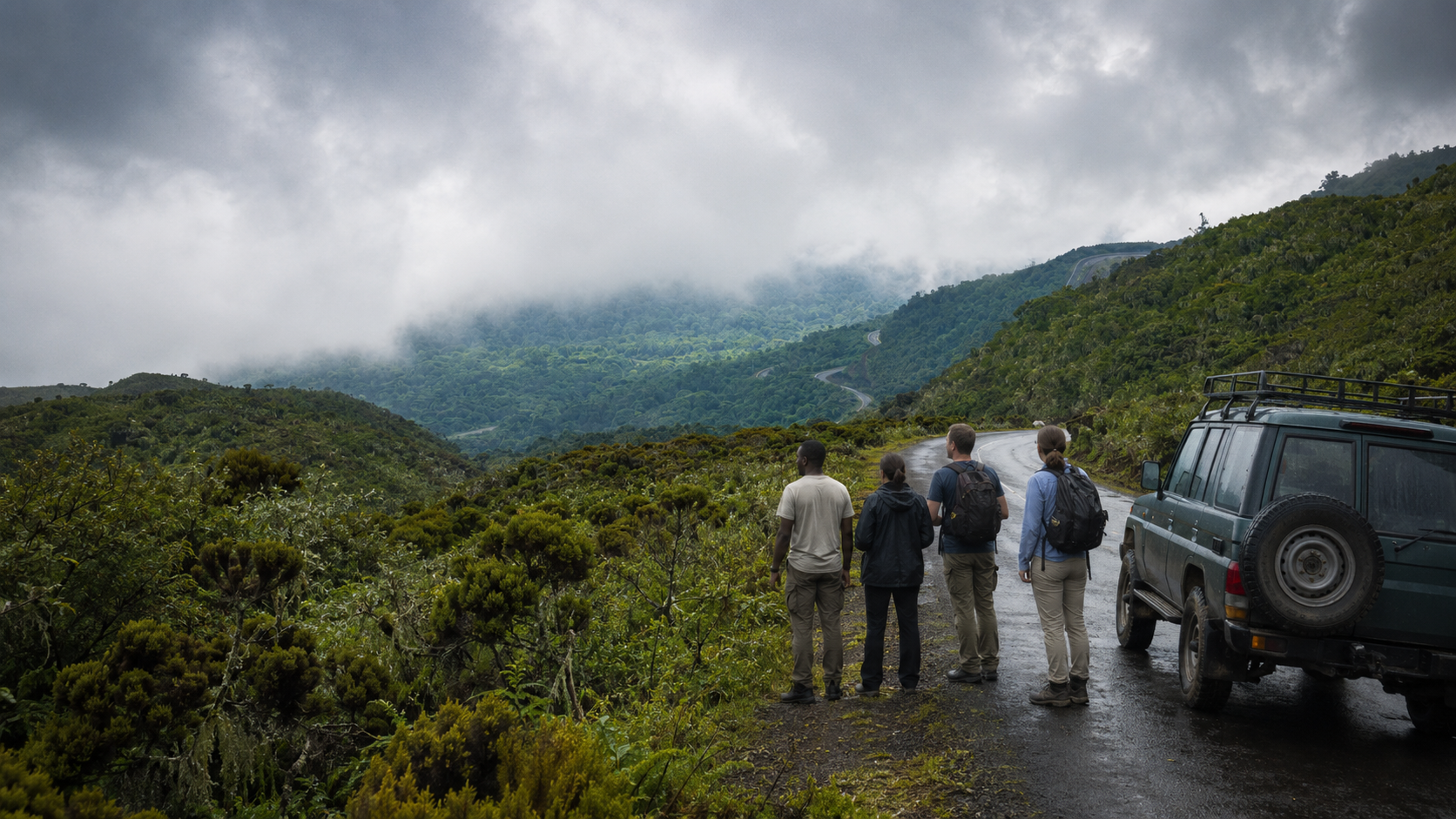
Pico Basilé can be visited from Malabo on an organised excursion that takes place mainly by road. Trekking is not compulsory. Depending on the option booked, the journey may be completed almost entirely by vehicle, include a few short walks or become a more demanding route undertaken largely on foot.
The real difficulty is not finding the mountain. It is knowing which route will be available on the chosen date. Before booking, you need to confirm access, possible permits, the documentation required and the furthest point the excursion is expected to reach. Mist, rain or a temporary restriction may also force the organiser to change the plan.
| Aspect | What you need to know |
|---|---|
| Starting point | Malabo |
| Most accessible option | Excursion mainly by vehicle |
| Trekking | Not compulsory |
| Duration | May take half a day or longer |
| Access | Must be checked before departure |
| Permits | May be required depending on the route |
| Conditions | Mist and rain may affect the visit |
| Basic preparation | Suitable footwear, waterproof clothing, water and a warm layer |
| Key detail before booking | Furthest point the excursion is expected to reach |
Can Pico Basilé be visited?
Yes, a visit can be organised from Malabo. However, the expression “going up Pico Basilé” is used to describe quite different activities. It might mean a panoramic excursion by vehicle, a road journey with short walks or an ascent requiring several hours on foot.
This is not a minor distinction. A provider confirming that the mountain can be visited does not tell you how far the vehicle will travel, how much walking will be involved or which areas will be open. A properly explained proposal should describe the intended itinerary and distinguish between what has already been confirmed and what still depends on permits, checkpoints or the weather.
Before paying, ask for clear answers to three questions:
Which section of the route is currently available?
What documentation must each traveller carry?
What is the furthest point the excursion is expected to reach?
If any answer is still pending, ask when it will be checked. There is little sense in confirming a reservation on the assumption that every type of excursion reaches the same place.
Absolute promises should also be treated cautiously. Nobody can guarantee that a mountain excursion will take place without changes. The difference between good and poor organisation lies in how that uncertainty is explained and what alternative is offered if the original itinerary is no longer feasible.
How to reach Pico Basilé from Malabo
Malabo is the most practical starting point for arranging the visit. The journey is made by road and can be booked with a driver, guide or local tour operator. Local assistance is useful for understanding checkpoints, confirming the available access and adjusting the route if conditions change.
Not every service includes the same responsibilities. A driver may provide transport only. A guide or operator might also check access, advise on documentation or accompany the group during stops. None of these duties should be assumed to be included unless they are explicitly mentioned in the proposal.
Travelling independently requires more than having a car
The main problem with an unplanned visit may not be finding the way. It could be something as simple as reaching a checkpoint without the correct documentation or discovering that the intended section of road is unavailable.
Nor should you assume that every vehicle is suitable. The right choice will depend on the road, the point you intend to reach and the conditions at the time. Ask what vehicle will be used and why it is considered appropriate for that particular route. A generic reference to private transport tells you very little.
A recent local check is worth more than an old blog post or an account from somebody who made the trip several months ago. Their experience may help you understand the destination, but it does not confirm the current conditions.
Permits and documentation: what you need to clarify
Certain areas may require authorisation or be subject to checkpoints. Booking a vehicle does not automatically mean that a permit is included. Checking whether a route is open and arranging the necessary access are also different tasks.
Before booking, request clear information about:
whether the proposed itinerary requires a permit;
who is responsible for checking or arranging access;
which documents every visitor must carry;
whether any additional costs apply;
how far the permit authorises the group to travel;
what alternative is offered if the route becomes restricted.
Requirements may change. A route downloaded from the Internet or another visitor’s previous experience cannot replace a current local enquiry. If a particular detail cannot yet be confirmed, the provider should explain when it will be checked and what will happen to the booking if the itinerary is not authorised.
During the journey, you will need to follow any instructions given at checkpoints. Ask whether photography is restricted in certain areas as well. Carrying a camera does not mean that every part of the route may be photographed.
Publishing a fixed list of documents without checking whether it remains valid would be irresponsible. The correct information will be whatever is confirmed for the specific date of the excursion by someone with the authority or local knowledge to verify access.
Can you drive up or do you need to trek?
Trekking is not compulsory if you want to experience the surroundings of Pico Basilé. Some excursions are designed to take place mainly by vehicle, while others involve considerably more walking. The commercial name of the tour is not enough to tell the difference.
| Option | How it is usually organised | Physical demand | What to ask |
|---|---|---|---|
| Vehicle excursion | Road journey with possible stops | Low or variable | Access and furthest reachable point |
| Vehicle with short walks | Road journey combined with brief walks | Low or moderate | Distances and type of terrain |
| Partial trekking route | A significant section is completed on foot | Moderate or high | Route, elevation and duration |
| Ascent on foot | Extended walking route | High | Preparation and specific planning required |
If you want a panoramic visit without significant physical exertion, ask for an itinerary conducted mainly by vehicle. Even then, find out how long you will walk, what the ground is like and whether the stops on foot are optional.
Terms such as “short walk” or “easy stroll” are too vague. Humidity, steep ground, mud and each traveller’s physical condition can change how demanding a route feels. A useful description should tell you what will happen from collection in Malabo until your return.
Trekking requires more detail: the planned route, walking time, elevation, condition of the terrain, expected pace and level of preparation. It should not be sold as a small extension to the vehicle excursion. It is a different activity and requires different decisions.
How much time should you allow for the excursion?
The visit may take half a day or continue for longer. The itinerary, checkpoints, stops, weather and any sections completed on foot will all affect its duration. There is no single timeframe that applies to every type of excursion.
Ask for an approximate collection time and expected return time. You should also find out how much variation the organiser normally allows for in the schedule. This estimate will help you plan the day, but it is not a guaranteed arrival time.
This becomes particularly relevant during a business trip. Scheduling the excursion immediately before a meeting, flight or fixed-time transfer leaves very little room for delays or changes.
Booking a longer excursion does not necessarily mean reaching a higher point or finding better views. Extra time adds value when it corresponds to a specific itinerary. If the proposal simply adds hours without explaining how they will be used, the difference is difficult to justify.
Weather, mist and visibility
Conditions in the mountains may be very different from those experienced when leaving Malabo. Temperature, wind, humidity, rain and mist can all change during the journey. Even when the visit takes place almost entirely by vehicle, you should prepare for a mountain environment.
Visibility is the least predictable element. Low cloud can conceal the landscape, reduce panoramic views or leave some locations without any clear outlook for much of the excursion. No responsible provider should sell an unobstructed panorama as though it were guaranteed.
That does not automatically make a misty day a wasted excursion. The vegetation, changing atmosphere and journey itself may still be worthwhile. However, if your main objective is to enjoy open views or take landscape photographs, you must accept that the result will depend on the conditions that day.
Ask what policy applies when the forecast is unfavourable. The activity might continue as planned, follow a different route, be postponed or be cancelled. It is better to understand those possibilities before paying, including any amendment or cancellation charges.
What you may find along the route
The ascent takes you away from Malabo’s urban surroundings and into a mountain landscape. As the road climbs, the vegetation, humidity and visibility begin to change. The stops and the journey have value in their own right, so the entire visit should not be judged solely by whether you reach one particular point.
The places included will depend on the route available. If a proposal mentions a specific stop, ask whether it is part of the planned itinerary and whether its accessibility can be confirmed before departure. Two excursions advertised under the same name do not necessarily follow the same route.
Images published online may also create unrealistic expectations. They tend to show days with the best light and clearest visibility. During an actual visit, mist may arrive halfway through the journey or cover the landscape for several hours.
The excursion description should distinguish between what is planned and what is guaranteed. The route, stops and furthest point should be explained as precisely as possible. The views, by contrast, depend on conditions that nobody can control.
Clothing and equipment for visiting Pico Basilé
The clothes normally worn around Malabo may not be sufficient for the excursion. Humidity, rain, wind and stops outdoors can change the perceived temperature, even when most of the journey is completed by car.
For a conventional panoramic excursion, you should carry:
closed footwear with good grip;
a lightweight waterproof jacket;
a warm layer;
water;
sun protection;
identification and other required documents;
personal medication;
a charged telephone or portable battery.
Technical mountaineering equipment is unnecessary if the visit follows the road and only includes brief stops. The recommendation changes when trekking is involved. In that case, request an equipment list adapted to the specific route and the expected condition of the terrain.
It is also worth asking whether you need to bring food and how long you will remain outside the vehicle. If you are travelling with children, older people or somebody with reduced mobility, explain this before booking. The provider should clarify the walking distance, type of surface and realistic possibilities for adapting the excursion.
If you have a medical condition that might be affected by physical exertion or altitude, consult a healthcare professional beforehand. A driver or guide can describe the route but cannot assess the individual health circumstances of each traveller.
How to organise the visit without leaving decisions until the last minute
The order matters. First, check access and decide which type of excursion you want. Only then should you choose the transport. Booking a car without knowing which route will be available could leave you with a confirmed transfer but not the visit you expected.
Ask for a summary covering the collection point in Malabo, planned itinerary, approximate walking time, required documentation, vehicle and expected return time. It should also explain what will happen if mist, rain or an access restriction affects the excursion.
A stay with some flexibility makes it easier to move the excursion to another day if conditions are unsuitable. The accommodation you choose will also affect the overall logistics, particularly when you need to coordinate work, rest, transfers and activities outside Malabo.
A reliable proposal does not promise an unchanging itinerary or perfect visibility. It tells you what has been confirmed, what may change and how any alteration will be handled. That information, far more than a spectacular photograph, is what allows you to decide whether the excursion genuinely fits your trip.
Frequently asked questions about visiting Pico Basilé
How do you visit Pico Basilé from Malabo?
The visit is normally organised by road with a vehicle and driver, guide or local tour operator. Before booking, confirm the available access, required documentation, furthest intended point and whether the excursion includes any sections on foot.
Do you need a permit to visit Pico Basilé?
Some areas may require authorisation or be subject to checkpoints. Ask who is responsible for checking or arranging access, which documents you must present and whether this service is included in the agreed price.
Can you drive up Pico Basilé?
Much of the excursion may take place by road. This does not mean that a vehicle can always reach the same point. The limit will depend on authorised access, checkpoints and the conditions on the chosen date.
Is trekking compulsory?
No. You can book an excursion conducted mainly by vehicle, a visit with short walks or a more demanding route on foot. To make an informed choice, ask how far you will walk, what the terrain is like and what level of preparation the activity requires.
How long does the excursion from Malabo take?
It may take half a day or extend for longer. The itinerary, stops, checkpoints, weather and sections completed on foot all affect the duration. Confirm an approximate return time and leave sufficient room before any important commitment.
What should I confirm before paying?
Check the itinerary, access, permits, documentation, vehicle, walking time and estimated return time. You should also ask what alternative will be offered if the route becomes restricted or visibility is particularly poor.
What happens if there is mist or rain?
The excursion may continue, follow a modified route, be postponed or be cancelled, depending on the conditions and the provider’s policy. As mist can significantly restrict the views, you should understand the amendment options before confirming the booking.
What clothing should I wear?
Bring closed footwear with good grip, a lightweight waterproof jacket, a warm layer, water and sun protection. For an excursion involving trekking, request specific advice based on the route and expected condition of the ground.
Is it advisable to travel independently?
It is not advisable without first checking access, documentation, checkpoints and road conditions. Local support reduces uncertainty, although you should clarify precisely which responsibilities the driver, guide or operator will assume.
Can Pico Basilé be visited during a business trip?
Yes, provided that you allow enough time and do not schedule the excursion immediately before a meeting, flight or important transfer. Explain your latest acceptable return time and ask how much variation there may be in the schedule.
