

Best Time to Travel to Malabo: Climate, Rainfall and Recommended Months
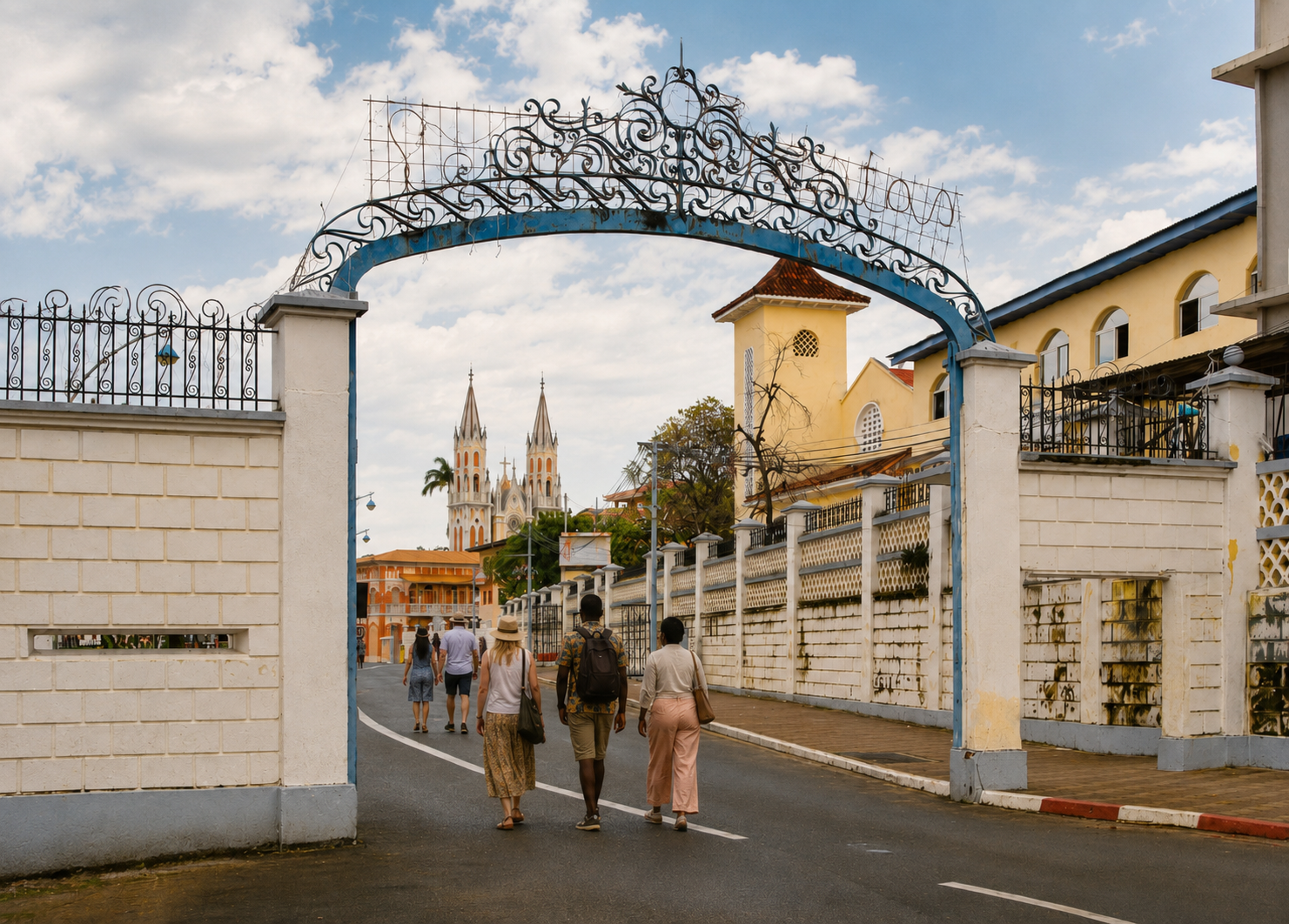
The best time to travel to Malabo is usually between December and February, when Bioko Island experiences its relatively drier period. These are generally the easiest months for exploring the city, arranging day trips and reducing the risk of rain setting the pace for your entire stay.
It is worth being careful with the phrase “dry season”. Malabo remains warm and humid throughout the year, and showers do not disappear completely in January or February. The real difference lies in how much the rainfall interferes with travel, visibility and outdoor plans.
The reason for your trip matters as well. A professional schedule can fit into almost any month. An itinerary built around viewpoints, secondary roads or excursions across Bioko needs considerably more flexibility.
| Criterion | Recommendation |
|---|---|
| Best general period | December to February |
| Usual conditions | Heat, humidity and possible showers |
| Business travel | Possible throughout the year |
| Excursions and nature | Preferably during the relatively drier months |
| Main advice | Keep the schedule flexible |
What Is the Climate Like in Malabo Throughout the Year?
Malabo has a humid tropical climate. Temperatures remain warm for most of the year, and cold weather is rarely what determines the timing of a visit. The difference between one period and another is more noticeable in the rainfall, humidity, cloud cover and visibility than in the temperature itself.
It does not follow a European calendar. There is no cold winter followed by a clearly dry summer. Instead, there are months when the rain tends to ease and others when it is wise to expect changing weather, wet surfaces and a less rigid schedule.
Humidity remains present even when rainfall decreases. It can intensify the feeling of heat, slow down the drying of clothes and make longer walks more tiring. A temperature that looks moderate on paper can feel quite different after several hours outdoors.
The island itself creates further variations. Malabo lies on the coast, but Bioko has high-altitude areas where wind, fog and visibility can change quickly. Pico Basilé is the clearest example: a bright morning in the city does not mean that conditions will be the same higher up.
Dry Season and Rainy Season
The relatively drier period generally falls between December and February. It is the most convenient window for combining walks around Malabo with journeys outside the city, although no day should be assumed to be completely stable.
March and November sit somewhere in between. Both can offer very usable days, but the weather is less predictable. They remain reasonable choices when the itinerary allows an excursion to be moved or the order of visits to be changed.
The likelihood of rain increases during the rest of the year. This does not mean continuous rainfall, but it does mean that an outdoor day may need adjusting. A journey may take longer, a high-altitude area may be covered by fog or an activity planned for the afternoon may work better in the morning.
The dry season does not guarantee an absence of rain. Climate patterns can help you choose a travel period, but the forecast for the days immediately before your plans should guide a specific excursion or journey.
Best Time to Travel to Malabo by Month
December, January and February usually offer the most favourable setting for most leisure trips. The rain does not disappear, but it generally interferes less with daily plans.
January is often one of the easiest options. It works well for a first visit, particularly when you want to spend time in Malabo and explore other parts of Bioko. It can also make days with several journeys easier to organise, although keeping some spare time in the schedule is still sensible.
February follows a similar pattern. The heat and humidity may feel stronger, but it remains a suitable month for combining city visits with excursions. Choosing between January and February is more likely to depend on your availability than on a dramatic difference in the weather.
December marks the beginning of the relatively drier period. It can work well for travellers whose dates depend on holidays, meetings or particular flights. A backup plan is still advisable because the tropical climate remains changeable.
March and November are transitional months. They are not the most predictable, but they should not automatically be ruled out. With a flexible itinerary and a recent weather forecast, both can be used well.
From April to October, organisation matters more than the calendar alone. Travel remains possible, but it is unwise to reserve every day for outdoor activities or rely on a single date for an important excursion.
| Month or period | General conditions | Suitability for travel | Main precaution |
|---|---|---|---|
| January | Relatively dry and warm | Very favourable | Humidity and possible showers remain |
| February | Warm and relatively dry | Very favourable | High heat and humidity |
| March | Transition towards a wetter period | Favourable with flexibility | Greater variability |
| April and May | Increasing humidity and rainfall | Travel is possible | Adapt outdoor activities |
| June to August | Humid months with variations in rainfall and cloud cover | Less predictable for excursions | Check the forecast and allow extra time |
| September and October | Humid and variable conditions | Requires flexibility | Possible itinerary changes |
| November | Transition towards the drier period | Favourable | Weather remains changeable |
| December | Relatively dry | Very favourable | Does not guarantee an absence of rain |
This table is a general guide, not a forecast. When travelling to a high-altitude area, making a long journey or booking an outdoor activity, the short-term forecast is far more useful than the average for an entire month.
The Right Time Depends on the Trip
Saying that December, January and February are the best months is a reasonable starting point. It does not settle every case. A business stay, a leisure trip and a corporate event involve different practical needs.
| Type of trip | Recommended period | Main criterion |
|---|---|---|
| First leisure visit | December to February | Relatively lower likelihood of rain |
| Business trip | Throughout the year | Schedule, accommodation and travel |
| Excursions and nature | Preferably December to February | Visibility and access conditions |
| Trip with fixed dates | Any month | Ability to adapt |
| Event with outdoor activities | Preferably during relatively drier months | Logistics |
First Leisure Visit
For a first stay, the relatively drier months make the trip noticeably easier. There is more room to explore Malabo and reserve a day for another part of Bioko without relying so heavily on last-minute changes.
The advantage is relative stability. There is a better chance of finding suitable conditions for walking, visiting viewpoints or travelling outside the city. There are no guarantees. Humidity, clouds and showers can still appear in January.
Business Travel
Business trips to Malabo take place throughout the year. For this type of stay, meetings, projects, flight availability and the schedules of the people involved usually take priority.
The weather does not disappear from the equation. During the wetter months, allowing more time between commitments is advisable, particularly when the day includes several journeys. It also makes sense to reduce unnecessary travel and choose accommodation where it is possible to work, rest and arrange meals without constantly depending on outdoor movement.
For further planning, read this business travel guide to Malabo.
Excursions and Nature
When the trip revolves around nature, the calendar matters more. Rainfall can affect access conditions, while fog and cloud cover may limit visibility at viewpoints and in high-altitude areas.
The relatively drier months tend to make these plans easier, but no date can promise a clear day. A sensible approach is to keep more than one possible time slot available and confirm the excursion shortly beforehand.
Travelling during the wet season does not mean abandoning every excursion. There may be perfectly usable days. The problem arises when the whole itinerary depends on one particular morning and there is no room to move it.
Corporate Events
For business meetings, conferences and gatherings involving several people, the climate mainly affects logistics. Group transfers, company visits and outdoor activities are easier to coordinate when rainfall is less frequent.
When the dates have already been fixed, the reasonable response is to build some breathing room into the programme, plan indoor alternatives and avoid connections that leave no margin for delay. This guide on how to organise a corporate event in Malabo covers the main points worth reviewing.
Can You Travel to Malabo During the Rainy Season?
Yes. The wet season does not make Malabo inaccessible. A professional stay, a family visit or a trip focused mainly on the city can proceed normally when the schedule allows for small changes.
The difficulty usually lies at the extremes. Assuming that it will rain throughout the entire stay is too simplistic. Planning every day as though the weather will remain stable is not especially realistic either.
In a tropical climate, a grey morning may give way to several useful hours. The opposite can happen as well. This is why a recent forecast is more useful than relying too heavily on the climatic reputation of a particular month.
Rain is not the only concern. Cloud cover can make a viewpoint less worthwhile, humidity can make a long walk more tiring and certain journeys may take longer than expected.
How to Organise the Trip When the Dates Cannot Change
Separate the activities that depend on good visibility from those that can go ahead in any weather.
Schedule the commitments that cannot be moved first.
Leave some free time for rearranging excursions or outdoor visits.
Check the weather forecast a few days beforehand.
Confirm longer journeys the day before.
Keep indoor alternatives ready for unsettled days.
This approach prevents a day from being written off too early and reduces the chance that one change in the weather will force the entire schedule to be rebuilt.
Malabo and the Mainland Do Not Follow the Same Climate Pattern
Malabo is located on Bioko Island. This is not a minor detail. It changes how much of the climate information available about Equatorial Guinea should be interpreted.
Many travel guides combine the island and the mainland and present a single recommendation for the entire country. That approach explains some of the conflicting advice surrounding June, July and August. A reasonable travel period for Bata is not necessarily the best choice for a stay centred on Malabo.
Bioko and Río Muni do not follow exactly the same rainfall pattern. Before selecting travel dates, check which part of the country the information actually refers to. “Equatorial Guinea” is too broad a reference when the decision depends on rainfall.
There are differences within Bioko as well. A forecast for Malabo does not necessarily describe what will happen in a higher area or another part of the island. The landscape and cloud cover introduce variations that a monthly table cannot settle.
When preparing your first stay in the country, this guide to travelling to Equatorial Guinea for the first time covers other practical matters worth reviewing before finalising the itinerary.
What to Pack for Malabo at Different Times of Year
Your luggage should account for three fairly constant conditions: heat, humidity and the possibility of rain. Even during the relatively drier months, carrying light protection against showers is worthwhile.
Lightweight, breathable clothing is usually the most comfortable choice. Suitable footwear is enough for walking around the city, but paths, natural areas and wet surfaces call for soles with better grip.
A compact raincoat, sun protection, insect repellent, a cover for important documents and a light layer for air-conditioned spaces or higher areas are all useful. During wetter months, quick-drying clothes and a second pair of shoes become more practical.
There is no need to prepare a fully technical travel wardrobe. Protecting your passport, phone, camera and work documents is sensible, though. In a humid climate, a simple waterproof cover can prevent a problem far more inconvenient than a brief downpour.
How Accommodation Affects the Planning of the Trip
The weather should not be the only factor when choosing accommodation, but it matters more during the wet season than it may first appear. When a day changes, having a comfortable place to work, rest or reorganise the schedule avoids unnecessary journeys.
During a business trip, quiet surroundings and reliable connectivity may matter more than a small difference in location. The same principle applies to a leisure stay: reducing travel makes variable days easier to use.
You can explore these points further in the guide to finding a quiet hotel to relax in Malabo and this article about choosing a hotel with fast WiFi in Malabo for comfortable remote work.
During the wetter months, accommodation where you can work, eat and rest without multiplying journeys considerably reduces the practical effect of a change in the weather.
Which Dates Should You Choose?
December, January and February are generally the safest choice when the aim is to explore Malabo and arrange excursions with less risk of rainfall disrupting the programme.
Travel remains viable outside these months. For a professional stay, an event or a visit with fixed dates, the ability to adapt the schedule often matters more than the season itself.
No month can promise clear skies. The most sensible decision is to combine general climate patterns with a recent forecast and an itinerary that does not collapse at the first change of weather.
Frequently Asked Questions About When to Travel to Malabo
What Is the Best Month to Travel to Malabo?
January is usually one of the most favourable options because it falls within the relatively drier period. December and February also tend to work well for combining city visits with excursions.
What Is the Driest Month in Malabo?
January is generally among the relatively less rainy months. That does not mean showers disappear or the humidity is no longer noticeable.
When Is the Rainiest Time in Malabo?
The months between spring and much of autumn generally experience wetter conditions. The frequency and intensity of rainfall vary within this period.
Does It Rain in Malabo During the Dry Season?
Yes. The dry season is less rainy in relative terms, but it does not mean a complete absence of precipitation.
Does It Get Cold in Malabo?
Temperatures in the city remain warm throughout the year. In higher areas, such as the surroundings of Pico Basilé, conditions may feel cooler, particularly with wind, fog or rain.
Is August a Good Time to Travel to Malabo?
It is possible to travel in August, but it is not usually the easiest choice for a programme centred on excursions, viewpoints or outdoor activities. A flexible schedule makes the stay easier to manage.
Can You Travel to Malabo for Business Throughout the Year?
Yes. Business trips can be organised in any month. During the wet season, it is advisable to leave more time between journeys and have indoor alternatives available.
Is the Best Time for Malabo the Same as for Bata?
No. Malabo is on Bioko Island and follows a different rainfall pattern from Bata and mainland Equatorial Guinea.
